Support: +91 80587 06992
Ghungroo wali payal, the traditional Indian anklet adorned with small brass or silver bells, is one of the most culturally rich pieces of jewellery in India. From Kathak and Bharatanatyam dancers to brides in Rajasthan, Gujarat, and Maharashtra, the ghungroo payal carries deep cultural meaning and is making a strong comeback in modern fashion in 2026. This guide answers the most common question: ghungroo wali payal pehenne se kya hota hai? What happens when you wear a ghungroo anklet?
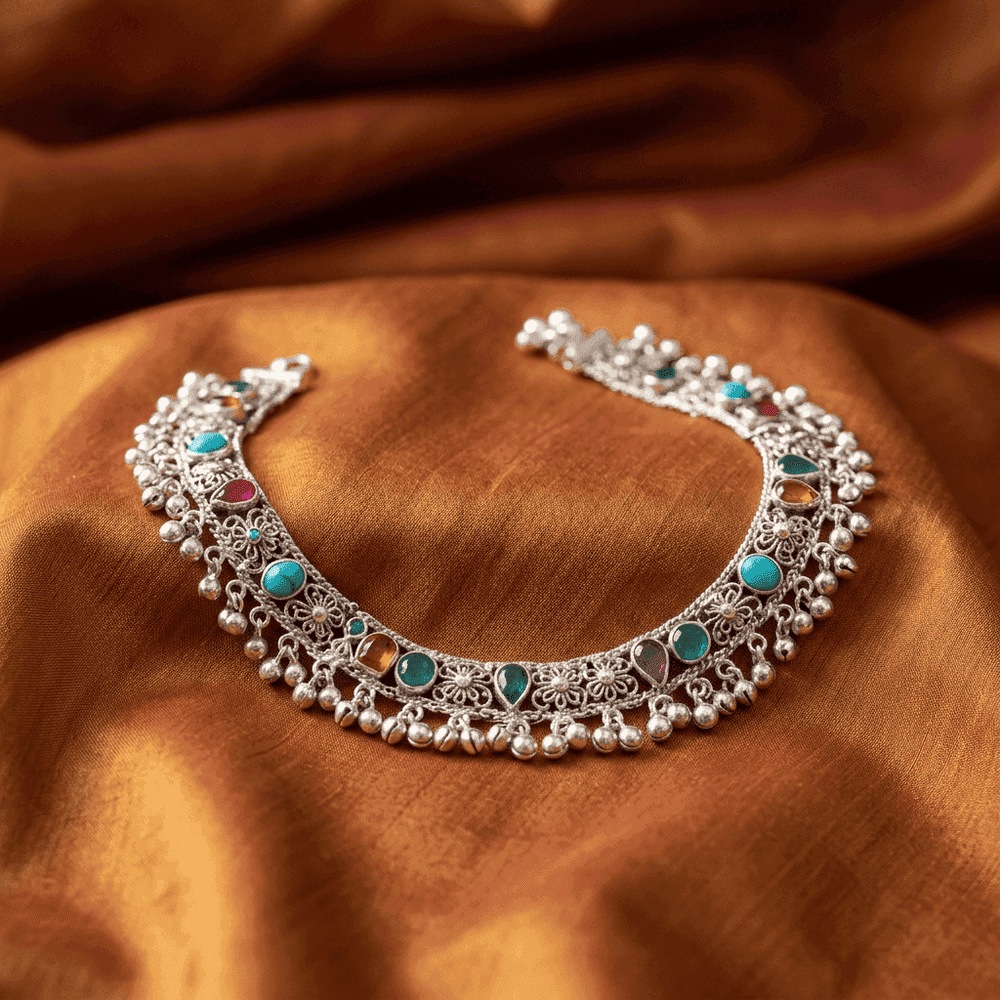
A ghungroo is a small hollow metal bell, traditionally made from brass, bronze, or silver, that produces a distinctive melodic sound when it moves. A ghungroo payal (also called ghungroo pajeb or ghungroo kade in different regional languages) is an anklet or payel that features multiple ghungroos strung together on a chain or wire.
Ghungroos come in different sizes:
This question has answers across multiple dimensions: spiritual, cultural, physical, and psychological.
1. Cultural and Traditional Significance
In Indian tradition, the sound of payal (anklets) has always been considered auspicious. The gentle ghunghur sound of ghungroo payals is believed in many Indian traditions to:
2. Physical Effects: Reflexology and Pressure Points
From an Ayurvedic and alternative medicine perspective, wearing silver or metal anklets applies gentle pressure to the ankle area, which contains several acupressure points linked to:
Note: These are traditional beliefs with roots in Ayurveda and reflexology. Modern medical science does not specifically validate the health claims of wearing anklets, but the cultural and psychological benefits are well-recognized.
3. Psychological Effect: Confidence and Femininity
The sound of ghungroo anklets creates a unique audio identity for the wearer. Research in sensory psychology shows that sound cues associated with one's own movement increase body awareness and confidence. Many Indian women report that wearing payals makes them walk more gracefully and feel more self-assured.
4. The Dancer's Perspective
In classical Indian dance forms, ghungroos are instruments. A Kathak dancer's ghungroos are tied on both legs (50 to 150 bells per leg) and their sound marks every footstep of the performance. Wearing ghungroos trains dancers to be aware of their foot movements with extraordinary precision.
| Type | Material | Occasion | Sound | Price Range |
|---|---|---|---|---|
| Fashion payal with tiny ghungroos | Silver-tone alloy | Daily wear, office, casual | Soft, subtle | Rs.99 to Rs.499 |
| Traditional Rajasthani payal | Brass, oxidized finish | Festivals, weddings, ethnic outfits | Moderate, traditional | Rs.199 to Rs.799 |
| Silver-plated bridal payal | Silver-plated brass | Weddings, receptions, engagement | Rich, melodic | Rs.399 to Rs.1,499 |
| Dance ghungroo set | Brass bells on leather strap | Classical dance, Garba, Kathak | Loud, rhythmic | Rs.300 to Rs.2,000 |
| Kundan ghungroo payal | Gold-tone with Kundan stones | Bridal, festival, royal events | Soft bells, decorative | Rs.499 to Rs.1,999 |
With Traditional Outfits:
With Western and Fusion Outfits:
How to Pair Ghungroo Payals:
VishaalMart offers a curated range of ghungroo payals and traditional anklets at Dawas Road, Jaipur:
Browse the complete VishaalMart Jewellery Collection for all anklet styles, or WhatsApp our team to check latest ghungroo payal stock and pricing.
Q1: Ghungroo wali payal pehenne se kya hota hai? (What happens when you wear ghungroo anklets?)
Wearing ghungroo payals connects you to a deep Indian tradition of feminine elegance and sound as adornment. Culturally, the sound is considered auspicious and protective. Physically, the gentle pressure on ankle acupressure points is linked in traditional Indian medicine to improved circulation and wellbeing. Psychologically, many women report feeling more graceful and confident when wearing payals.
Q2: Is it okay to wear ghungroo payal to office?
Yes, a lightweight ghungroo payal with very small, quiet bells is perfectly office-appropriate. Choose a thin silver or gold-tone chain with tiny ghungroos that produce minimal sound. Avoid the heavy dance-style or loud traditional payals for professional settings.
Q3: What is the difference between payal, pajeb, and ghungroo?
Payal and pajeb are regional synonyms for anklet (payal in Hindi/Rajasthani, pajeb in some North Indian dialects). Ghungroo specifically refers to the small bells attached to the anklet. A ghungroo payal is simply an anklet with bells. A payal without ghungroos is a plain anklet chain.
Q4: Can unmarried women or girls wear ghungroo payals?
Yes, absolutely. While married women in some communities traditionally wear payals as a symbol of marriage, there is no rule against unmarried women or girls wearing anklets. In modern India, anklets are fashion accessories enjoyed by women of all ages and marital statuses.
Explore our VishaalMart Jewellery Collection for the latest ghungroo payals and traditional anklets, or WhatsApp our team for personalised jewellery recommendations from VishaalMart Jaipur.

Written by
Founder of VishaalMart • 9+ Years IT Experience
Helping Indian customers choose the best laptops, electronics and artificial jewellery since 2026. Based in Jaipur, Rajasthan.